EPDM roofing is the modern flat roof standard across the UK — and one of the most common questions homeowners ask before investing in a new system is how long it will actually last. The answer depends on installation quality, deck condition, and the local environment. This post covers what you can realistically expect from an EPDM flat roof, what shortens its life, and when the time comes to replace it.
📞 Call 01473 974744 — Free Estimate
How long does EPDM roofing last?
A correctly installed EPDM rubber membrane carries a 25-year manufacturer guarantee as standard. In practice, well-installed EPDM systems routinely last 40 to 50 years without requiring replacement. Unlike mineral felt — which degrades through UV exposure, thermal cycling, and moisture absorption — EPDM is chemically stable across a wide temperature range and does not become brittle or crack with age under normal conditions.
The 25-year guarantee figure is deliberately conservative. Manufacturers set it based on worst-case installation and environmental conditions. A correctly detailed EPDM roof installed on a sound deck in Suffolk’s temperate climate will comfortably exceed that figure in the vast majority of cases.
What affects EPDM roofing lifespan
Installation quality — The single most important factor. EPDM’s weak points are its edge details, upstand terminations, and outlet connections — the areas where membrane meets another material. A correctly installed system has fully bonded edges, properly dressed upstands, and watertight outlet connections. A poorly installed system fails at these points within a few years regardless of membrane quality.
Deck condition at installation — EPDM installed over a compromised deck will not last. Moisture trapped in rotten or delaminated boarding expands and contracts with temperature changes, stressing the membrane from below. Always ensure the deck is fully inspected and any damaged boards replaced before the membrane goes down — this is non-negotiable on any reputable installation.
Drainage — Persistent ponding water does not penetrate a correctly installed EPDM membrane, but it does add structural load to the deck and can accelerate degradation of edge details and flashings over time. A roof with good falls and clear outlets will always outlast one with drainage problems.
Foot traffic — Standard EPDM is not designed for regular foot traffic. Occasional maintenance access is fine. A roof used as a terrace or walked on regularly will show surface wear and is better suited to GRP fibreglass with an anti-slip gelcoat finish.
Overhanging trees — Leaf debris retaining moisture against the membrane, and branches abrading the surface during wind, can reduce lifespan over time. Keeping gutters and outlets clear and trimming back overhanging vegetation is the most effective low-cost maintenance action on any flat roof.
EPDM vs felt — lifespan comparison
Mineral felt has a practical lifespan of 10 to 15 years under normal UK conditions — less on south-facing roofs with high UV exposure, and less again in coastal environments like Felixstowe where salt air accelerates degradation. Most felt roofs are also laid in multiple layers over time as each layer fails, which adds weight to the deck without improving longevity.
EPDM outlasts felt by a factor of three to four in real-world conditions. The upfront cost of EPDM is higher than felt, but the whole-life cost — accounting for the near-elimination of repair and replacement cycles over a 40-year period — makes EPDM significantly cheaper over time. For any homeowner in the Ipswich area replacing an ageing felt roof, EPDM or GRP is the correct upgrade regardless of initial budget pressure.
Signs your EPDM roof needs attention
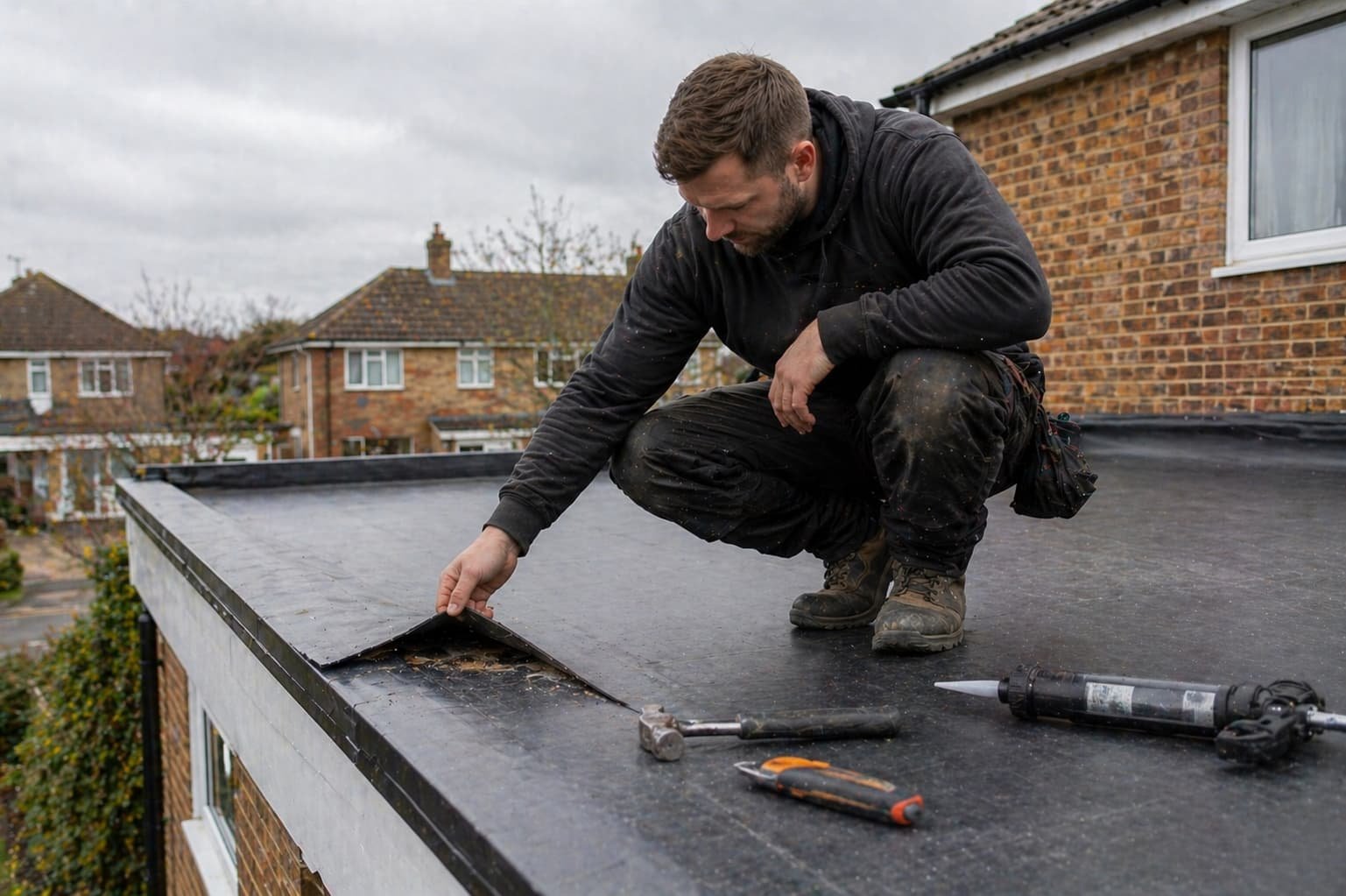
A well-installed EPDM roof requires very little maintenance, but it is worth carrying out a visual inspection once a year — particularly after winter storms. Signs that warrant a professional assessment include: visible splits or tears in the membrane surface, lifted or peeling edges where the adhesive bond has failed, persistent ponding water that does not drain within 48 hours of rainfall, and any signs of internal damp directly below the roof area.
Minor issues identified early — a lifted edge, a failed flashing — are straightforward and inexpensive to repair. Left unattended, they allow water into the deck and turn a small repair into a full replacement. Annual inspection is the most cost-effective maintenance strategy for any flat roof.
When to replace rather than repair
If your EPDM roof is within its guarantee period and showing isolated failure at edge details or flashings, repair is almost always the correct decision. If the membrane itself is splitting, shrinking away from upstands, or showing widespread adhesive failure across the field of the roof, replacement is the better investment. A membrane in widespread failure cannot be reliably patched — the underlying adhesive bond has degraded across the whole surface and further failures are inevitable.
For guidance on roofing standards and finding accredited contractors in your area, visit the National Federation of Roofing Contractors. If your EPDM roof is showing any of the signs above, call our team on 01473 974744 for a free assessment.