
📞 Call 01473 974744 — Free Estimate
Flat roof repair is far cheaper when you catch the problem early. A flat roof rarely fails overnight — it gives warning signs for months, sometimes years, before a leak reaches the rooms below. Learning to recognise those signs is the difference between a small, affordable repair and a full replacement. If you own a flat roof in Ipswich or the surrounding Suffolk villages, here are the signals that tell you it’s time to call a professional.
Damp Patches and Stains on Interior Ceilings
The most obvious warning comes from inside. Brown or yellow staining on an upstairs ceiling, flaking paint, or a musty smell in a room beneath the roof all point to water getting through the membrane. By the time damp shows internally, moisture has usually been tracking across the roof deck for a while, so this is never a sign to ignore. The leak’s entry point is often nowhere near the stain, which is why tracing it is a job for someone who works on flat roofs regularly.
Ponding Water That Never Drains
A flat roof isn’t truly flat — it’s built with a slight fall so water runs to the outlets. When you see pools of standing water still sitting on the surface more than 48 hours after rain, that fall has been lost, usually through deck movement or a blocked outlet. Suffolk’s wet winters make ponding a common problem locally, and standing water accelerates membrane breakdown, adds weight, and works its way into any weak seam it can find.
Blistering, Cracking and Splits in the Membrane
Get up where you can safely see the surface and look closely. Blisters and bubbles mean moisture or air is trapped under the membrane; cracks and splits mean the material has become brittle with age and UV exposure. On older felt roofs this shows first at the seams, and on EPDM it tends to appear where the membrane has been stretched over an edge. Any break in the surface is a direct route for water into the structure.
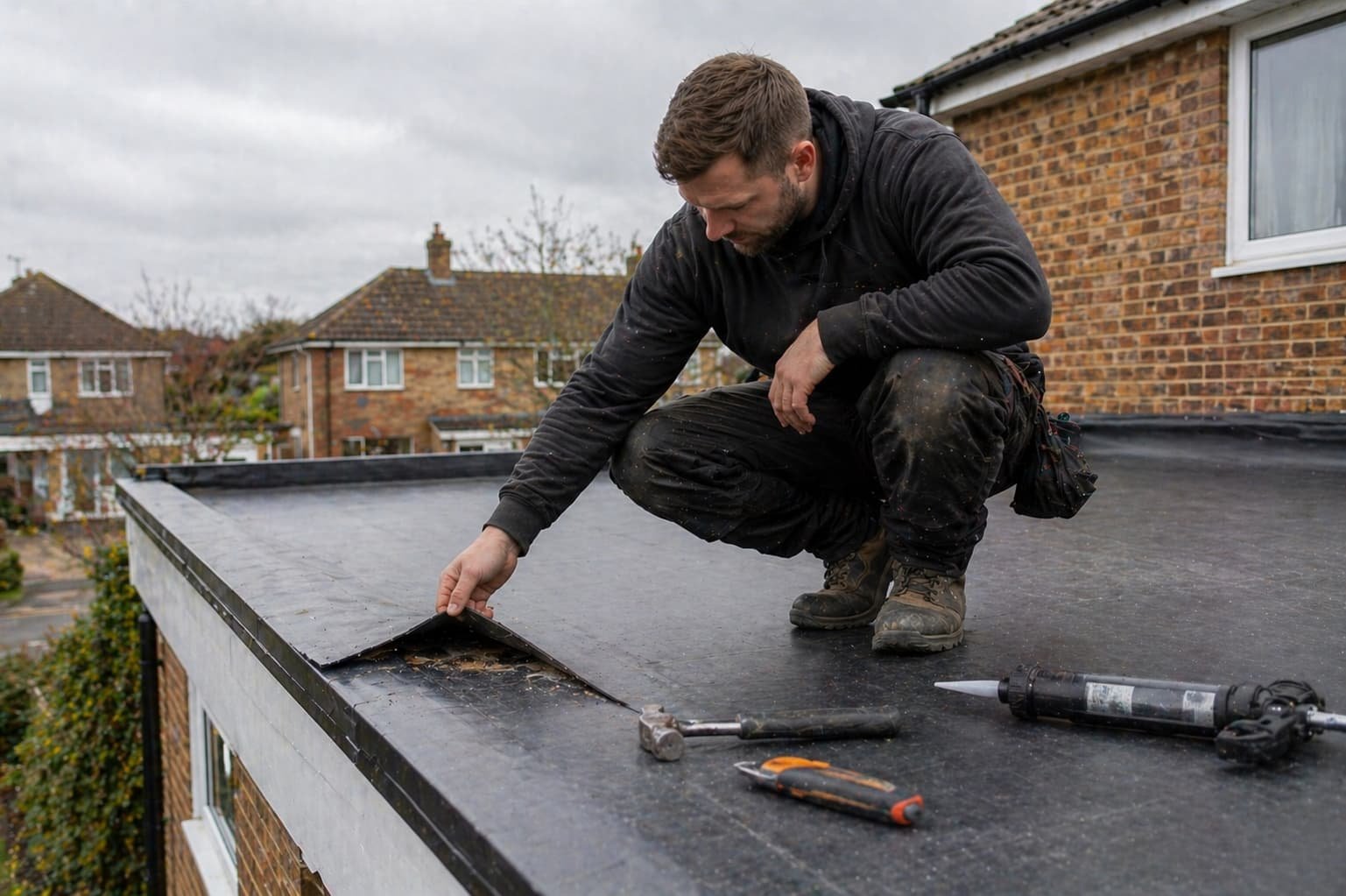
Lifting Seams and Failing Flashing
The joins are where flat roofs are most vulnerable. Seams that have peeled or lifted at the edges, and flashing that has pulled away from walls, chimneys or roof lights, let water bypass the membrane entirely. Flashing failure around upstands and abutments is one of the most common causes of flat roof leaks we see across Ipswich, and it’s frequently missed because the damage sits at the perimeter rather than the main field of the roof.
Moss, Debris and Organic Growth
A build-up of moss, leaves and grit holds moisture against the surface and blocks the outlets that keep the roof draining. Left alone, organic growth traps damp exactly where you don’t want it and hides the early cracks that a clear surface would reveal. Regular clearing is simple maintenance, but heavy, established growth often signals the roof has been neglected long enough for other problems to develop underneath.
Age and General Wear
Every flat roof has a working life. Older felt systems may only last 10 to 15 years, while a quality EPDM or fibreglass roof can run considerably longer. If your roof is approaching the upper end of its expected lifespan and showing two or three of the signs above at once, you’re usually past the point where patch repairs make sense — and a professional assessment will tell you honestly whether repair or replacement is the better spend.
When to Get It Checked
If you’ve spotted any of these signs, the safest move is a flat roof repair inspection before the next spell of heavy weather. Catching a lifted seam or a blocked outlet early can add years to a roof that would otherwise need replacing. For guidance on flat roofing standards and choosing a competent installer, the National Federation of Roofing Contractors is a useful independent reference.
Not sure how serious what you’re seeing is? We’re happy to take a look and give you a straight answer on whether it’s a repair or something bigger.
If you have spotted any of these on your roof, our roof repairs page sets out what we do and what it costs.